North Carolina's Rural Education Pioneers: Why Subscription Schools Still Matter
Before widespread public education, community-funded subscription schools, exemplified by Person County's preserved Van Hook facility, offered a vital, self-reliant path to learning, shaping the foundations of rural Southern education.
AI-generated image
When we consider education today, the idea of universal access to public schools seems like a fundamental right. But what did learning look like in North Carolina, especially in its sprawling rural areas, before the advent of widespread public education? The answer lies in institutions like the Van Hook Subscription School, a powerful reminder of community self-reliance and the foundational struggles for knowledge in the 19th-century South.
For much of the 19th century, formal schooling for many children in North Carolina was far from a given. While the University of North Carolina was established in 1789 and private academies served some, the first public school for younger students didn't open until 1840, leaving a significant gap that private initiatives had to fill. Amidst this landscape, "subscription schools" emerged as a grassroots solution, offering an education funded directly by the families and communities they served. These institutions, often a precursor to or contemporary with early academies, gradually spread throughout the state during the 1840s and 1850s, representing a vital, if rudimentary, educational network.
The Bedrock of Community Learning
Subscription schools operated on a simple principle: parents or community members would "subscribe" funds to pay a teacher, often in a small, single-room building. This system was born out of necessity, driven by a desire for education in areas where state-sponsored schools were nonexistent or too distant. In our view, these schools weren't just about lessons; they were a testament to collective will and local initiative. They provided an opportunity for both the prosperous and the less fortunate to gain an education, fostering a sense of shared community responsibility for the intellectual growth of the next generation. It was an era where the schoolhouse often doubled as a social hub, with activities like holiday programs and picnics cementing its place in the community fabric.
Van Hook: A Window to the Past
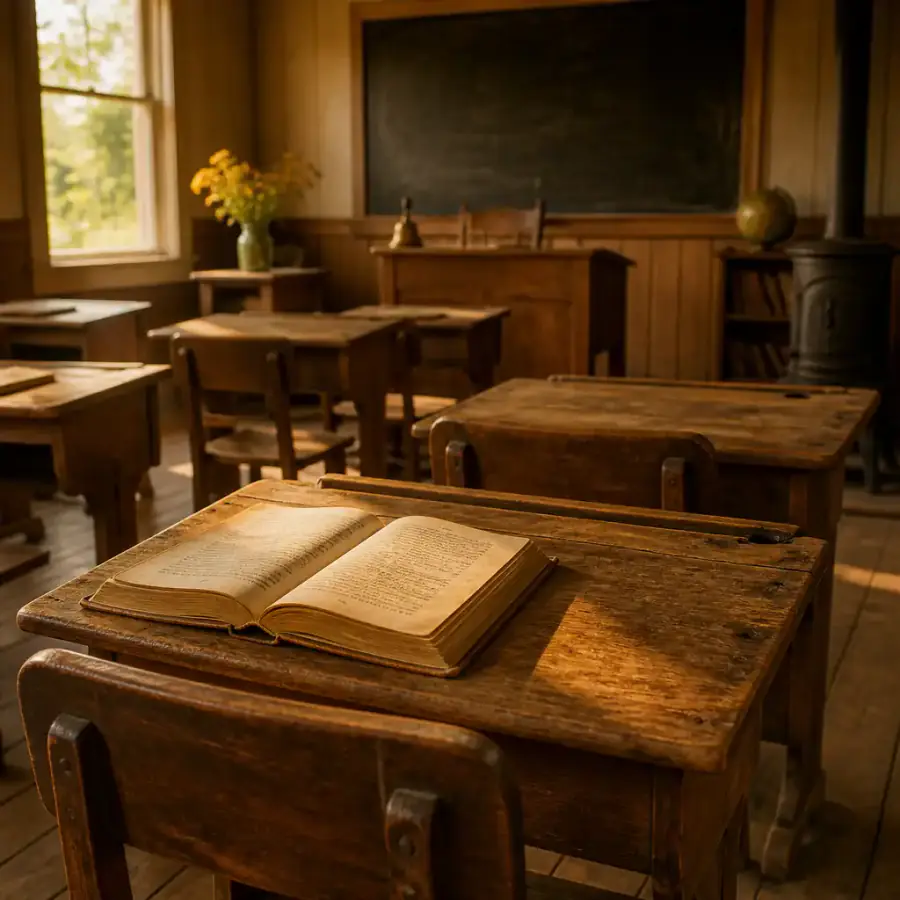
Today, the legacy of these schools is perhaps best understood through preserved examples, such as the Van Hook Subscription School. Located behind the Person County Museum of History in Roxboro, this historic schoolhouse offers an invaluable glimpse into what education looked like for countless rural children. While specific day-to-day details of Van Hook's operation are part of its unique history, its very existence and preservation by the Person County Museum of History speaks volumes. It reminds us that education was once a more intimate, localized endeavor, often requiring families to collaborate closely to secure learning opportunities. The physical presence of such a structure allows us to connect directly with the past, understanding the modest yet profound environments where generations learned to read, write, and calculate.
A Legacy of Resilience and Access
The story of subscription schools like Van Hook is more than just an archival footnote; it's a powerful narrative about resilience. These schools didn't just teach academics; they built communities and offered a pathway for social and economic improvement in an era of limited resources. They underscore a period where access to education was not guaranteed but was, instead, a privilege earned through local commitment. The fact that the Van Hook Subscription School has been preserved by the Person County Museum of History is a testament to its significance, allowing current residents and visitors to appreciate the educational journey that brought us to where we are today. It’s a compelling argument for the enduring value of local history and the foundational efforts that paved the way for the comprehensive public education systems we often take for granted.
Keep reading
No topics yet: start the first one.
More stories
Why Roxboro's History Museum is a Must-Visit Treasure
The Person County Museum of History offers more than just artifacts; it's a vibrant campus inviting residents and visitors to connect with the roots of our community and the spirit of innovation.
Roxboro's Surprising Past: More Than Just Another Carolina Town
Delve into the rich and unexpected history of Roxboro and Person County, from its foundational moments and industrial heart to a remarkable, yet tragic, connection to the RMS Titanic.
Roxboro's Governor: Unpacking the Complex Legacy of W. W. Kitchin
William Walton Kitchin, a Roxboro lawyer who became North Carolina's 52nd governor, championed progressive reforms while actively participating in white supremacist movements, leaving a complicated historical footprint.